



 Maintenance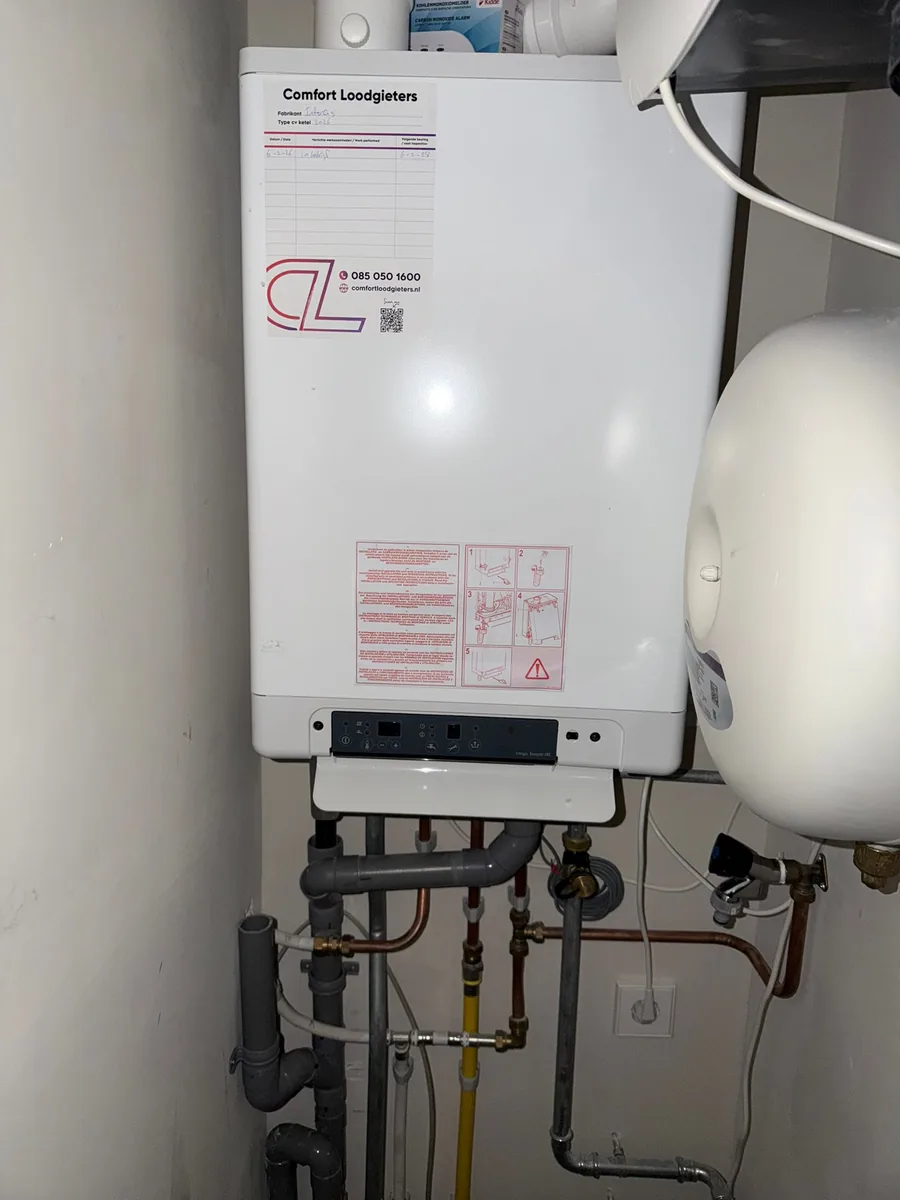
No hot water, a flashing error code or radiators that stay lukewarm — and the boiler display shows a pressure of 0.8 bar. Low water pressure is by far the most common "breakdown" we come across, and in nine out of ten cases you can fix it yourself in fifteen minutes. Here's how to top up your boiler safely.
When do you need to top up?
The water pressure of a central heating system should be between 1.5 and 2 bar when cold. If it drops below 1 bar, the boiler shuts itself down as a precaution and shows a low-pressure error code (on a Vaillant, for example, F.22 — see our overview of error codes). Topping up is also needed after bleeding the radiators, and often at the start of the heating season: over the summer the pressure slowly drops away.
| Pressure (cold) | What it means | What to do |
|---|---|---|
| Below 1 bar | Too low, boiler locks out or is about to | Top up to 1.5–2 bar |
| 1.5 – 2 bar | Just right | Nothing |
| Above 2.5 bar | Too high, pressure relief valve may start leaking | Drain some water via a radiator or call an engineer |
| Keeps dropping | Leak or faulty expansion vessel | Call an engineer |
What you'll need
- A filling loop — on many boilers it's already attached to the filling valve; otherwise available at any DIY store (check the right fitting, usually 1/2" or 3/4")
- A cloth or small container for the few drops when disconnecting
- Possibly pliers or a small spanner if the filling valve is stiff
How to top up your boiler: step by step
- Switch off the boiler and let it cool. Switch the boiler off or turn the thermostat right down. Hot water expands and shows a higher pressure than cold water — so always top up a cooled-down system, otherwise you'll add too little.
- Connect the filling loop. Connect the hose to the filling valve below or next to the boiler and to a water tap (often a tap near the boiler or the washing-machine tap). Let the hose fill first with the water tap open and the filling valve closed, so there's no air in the hose that you'd otherwise pump into the system.
- Top up slowly. Open the water tap, then slowly open the filling valve. You'll hear the water flowing. Keep an eye on the gauge or display and stop as soon as the pressure reads 1.5 to 2 bar. Better to fill in two short goes than too much in one.
- Close and disconnect. Close the filling valve first, then the water tap. Disconnect the hose over the cloth. Check that the filling valve is really closed — a valve left slightly open lets the system pressure creep up over time.
- Bleed and check. Switch the boiler back on and reset any error code. Briefly bleed the radiators once more (fresh water has brought air with it) and look at the pressure again after an hour of heating. If it's still neatly between 1.5 and 2.5 bar, you're done.
How often is topping up normal?
Once or twice a year is perfectly normal: after bleeding, or at the start of the heating season. If you have to top up more often — every few weeks, or even every week — water is disappearing somewhere. The cause is usually a leak in the pipework or a radiator, or a faulty expansion vessel: it normally absorbs the expansion of the water, but if its membrane has failed, the pressure shoots up when heating and the relief valve overflows. Both are jobs for an engineer, and both get worse if ignored: a small leak inside a wall or under a floor eventually causes far more damage than the repair costs.
Tip: during a service visit we check the expansion vessel's pre-charge as standard. People who top up several times a year have often had a vessel that stopped working years ago.
Key takeaways
- Cold water pressure: 1.5–2 bar is right, top up below 1 bar, above 2.5 bar is too much
- Always top up a cooled-down system, slowly and with an eye on the gauge
- After topping up: filling valve fully closed, bleed the radiators, check the pressure again
- Topping up more than twice a year? Then there's a leak or a faulty expansion vessel
Pressure won't rise, or drops straight away again?
Then the problem runs deeper. Our engineers trace leaks, replace expansion vessels and filling valves and make sure your system is ready for winter. For a breakdown in Amsterdam and the surrounding area we're often on site the same day — with no call-out fees.


